
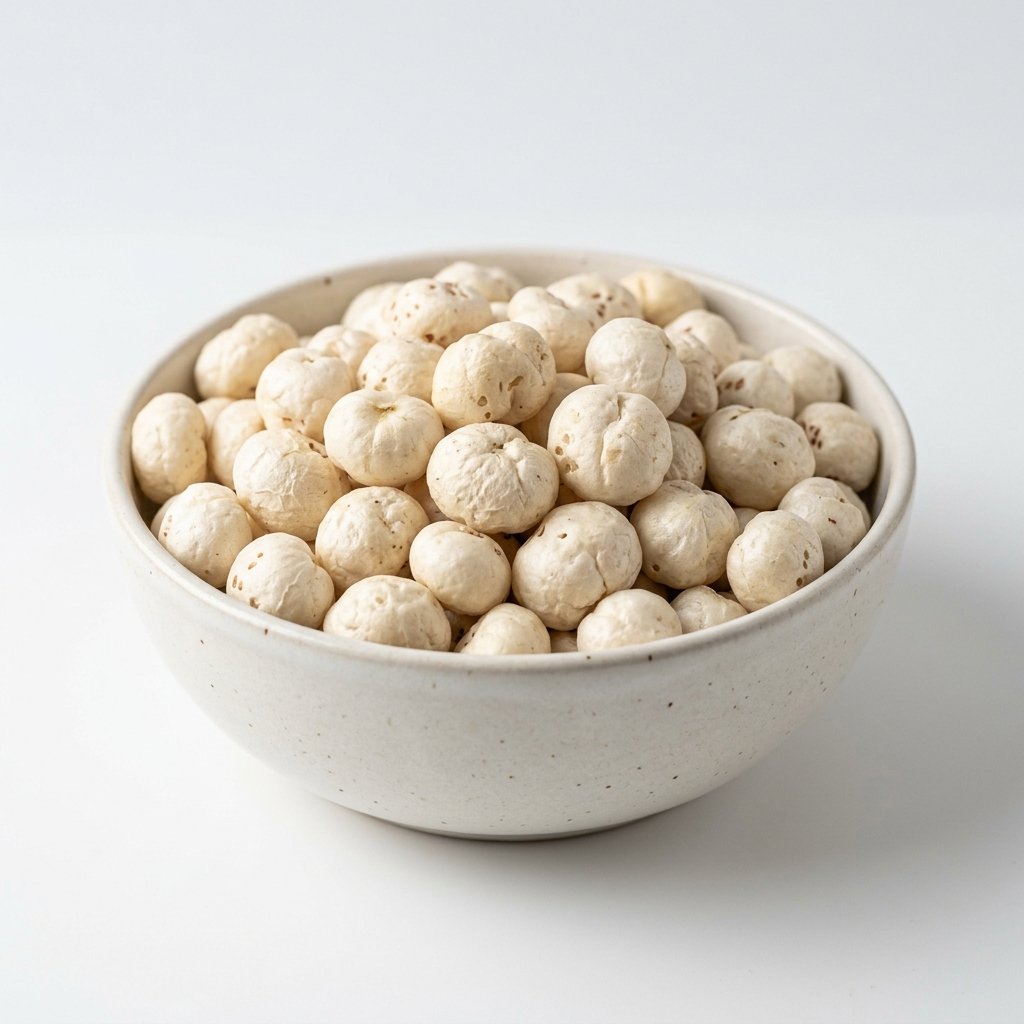
Ever wondered how raw lotus seeds transform into the puffy, white, crunchy makhana we eat? Unlike grains or nuts that grow on trees or dry soil, makhana cultivation is a highly labor-intensive aquatic process. Let’s take an inside look at the journey of makhana from muddy ponds to your snack packet.
Step 1: Harvesting Seeds from Muddy Ponds
Makhana comes from the seeds of the Euryale Ferox lotus plant, which grows in water bodies. In Bihar, India, farmers dive deep into the muddy beds of ponds under the scorching sun to collect the small, dark purple seeds of the lotus plant. This step requires immense skill and physical strength.
Step 2: Sun Drying and Cleaning
Once harvested, the seeds are thoroughly washed to remove mud and organic debris. They are then spread out on large mats to dry under the sun. The drying process is critical to ensure the seeds pop properly in the next stage.
Step 3: Roasting and Popping
This is where the magic happens. The dried seeds are heated in large iron pots over a high-heat furnace. Once they reach the perfect temperature, the seeds are placed on a hard wooden surface and struck with a wooden mallet. The sudden pressure causes the seeds to burst open with a loud popping sound, turning into white, fluffy makhana!
Step 4: Quality Sorting and Packaging
After popping, the makhana is sorted into different grades based on size and color. The premium, jumbo-sized seeds are separated, polished, packaged, and shipped to bring you the freshest, crunchiest organic snacks.